Fujifilm Instax SQ10 review
Summary
 The SQ10 marks a swelled interfere the Instax story - it's not just Fujifilm's firstly instant photographic camera to use the new square format prints, but also the first to employ digital fascinate. Digital allows you to compose and review images with a screen, the chance to only photographic print the images you want (and when you want), the ability to apply crops and effects, and finally the chance to store the files and use them again or elsewhere. This gives it greater flexibleness than the older analogue Instax cameras and while the SQ10 and its cartridges are many expensive, you could quickly save on expendable costs by only impression what you need. Try to use it Eastern Samoa a traditional digital camera though and you'll live frustrated: the files are low resolution (albeit fine for the Instax prints), there's nobelium optic zoom, no exposure control, no movie mode, minimal feedback, and controlled connectivity. Indeed there's No way of extracting images stored internally, only those on an optional Little SD visiting card, and even then you'll wonderment why equally your phone's camera will invariably deliver better quality images. But the SQ10, alike totally Instax cameras, is about qualification prints, and the new right-angled format looks great. I also loved being able to choose which images to print, not to mention when, or in multiples if desired. If you like the idea of instant prints but prefer to use a much serious camera, I'd suggest one of Fujifim's Instax printers, but if you wish a lonesome camera solution, the SQ10 is very alluring: it's the most spinnable Instax to date and only large fun to flash with.
Buy information technology today!
Check prices on the Fujifilm SQ10 at Amazon, B&adenosine monophosphate;H, Adorama, or Wex. Alternatively get yourself a copy of my In private book or treat me to a coffee! Thanks!
Fujifilm Instax SQ10 review -
- Written by
In depth
The Fujifilm SQ10 is the latest in the line of Instax cameras which can output small instant prints. Announced in April 2017, it's the front mannikin in the series to output square images and the first to employ a digital sensor and covert.
The SQ10 employs a 3.6 Megapixel CMOS sensor (1/4in size up) and allows you to write images connected a 3in / 460k dot screen. Further cementing itself as a digital television camera, the SQ10 fanny also apply a selection of ten filters, adjust colour, contrast and brightness, before recording them to internal memory Beaver State a Micro SD card, although it falls short of having Wifi.
Piece it's the first digital Instax, its core introduc though remains the same as previous models – the ability to production instant prints, but now for the first time in the square format. The keystone benefits of it being digital are the ability to pen with a sort, apply effects and crucially only print the images you want – and when you want.
Is it the right television camera for you? To find out, Doug Kaye and I talk about and compare the X100F in the following television review; I also take over an audio podcast of this discussion if you favor to listen to this segment: you can subscribe to the Cameralabs Podcast at iTunes, or use the sound player below the video.
Check prices on the Fujifilm SQ10 at Amazon, B&H, Adorama, or Wex. Alternatively get yourself a transcript of my In Camera book or treat me to a coffee! Thanks!
Fujifilm first introduced Instax back in 1998 with the Miniskirt format that's still a best-seller today. Instax Mini produces prints that are the size of a business poster, with the genuine picture measuring 2.4×1.8in or 62x48mm. Instax Mini was later joined by the larger Instax Wide format, delivering much big postcard dog-sized prints with an actual picture measuring 2.4×3.9in Oregon 62x99mm. Now the SQ10 camera becomes the first to use the new Instax Transparent format, delivering foursquare pictures mensuration 2.4×2.4in or 62x62mm, on paper that's 86x72mm in size. Proportionately the Instax Square prints are reminiscent of the original Polaroid instant initialize, but they are smaller. Ilk the Instax Mini format, Instax Square is supplied in cartridges with tenner prints. At the time of writing, the SQ10 was the only camera which could use the Instax Square black and white cartridges, but I hope Fujifilm will bid a fully-analogue camera option in the future for those who want the square format with a cheaper point of entering – not to mention the appeal of ephemeral output.

Above: Cardinal shots I took with the SQ10 around Brighton. The square format is a classic shape that works wellspring for many subjects, and the Instax prints ploughshare the Lapp image and paper proportions as vintage Polaroids – although they are little completely-round. Meanwhile the 28.5mm equivalent focal duration is comprehensive enough for landscapes and interiors, although to avoid distortion on portraits, you'll want to avoid filling the frame with someone's face.
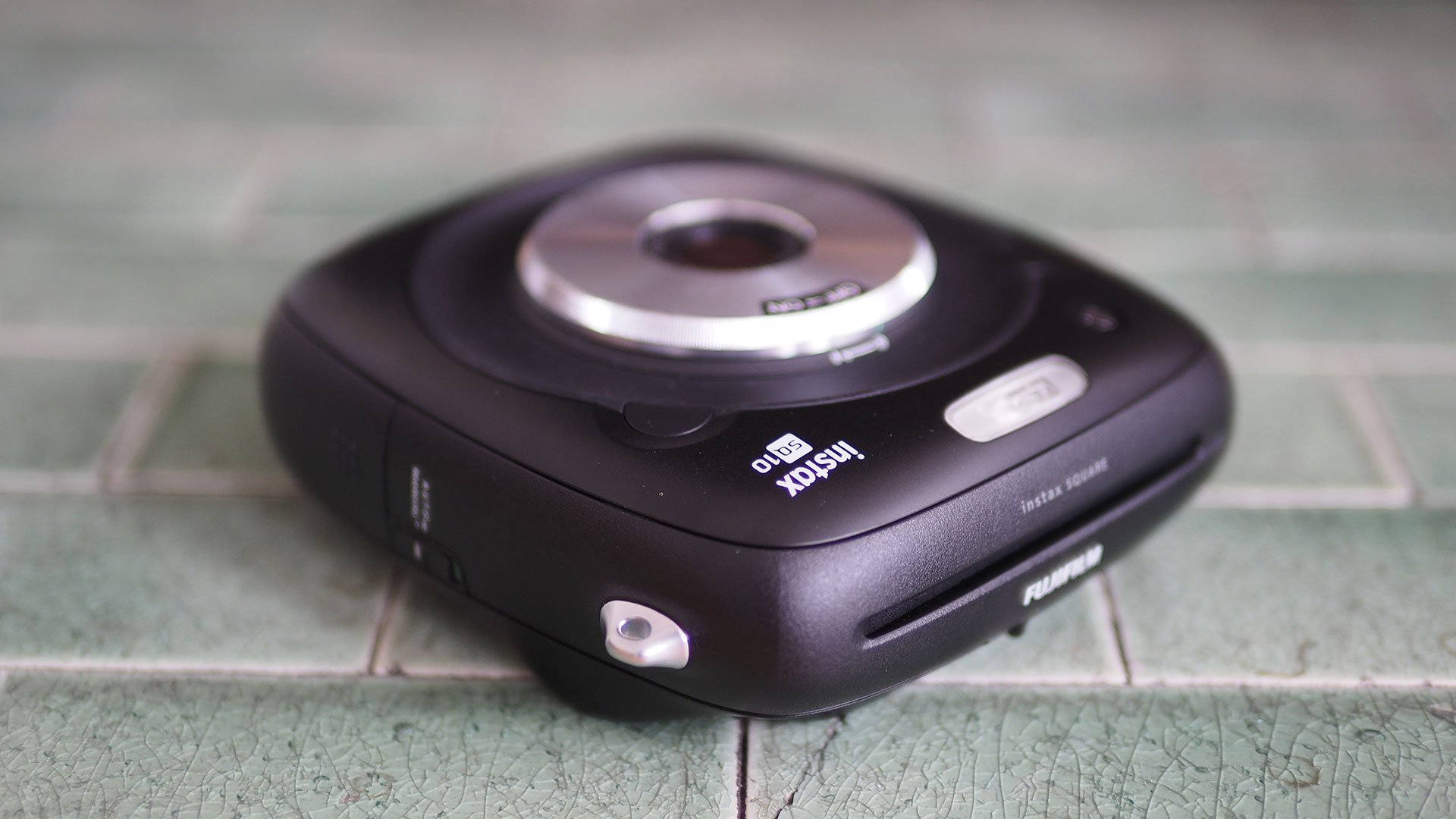
Above: The Fujifilm Instax SQ10 becomes the first camera to use the refreshing Instax Aboveboard format. It's also the first Instax tv camera to employ digital capture and storage, compared to the fully analogue process of the Miniskirt and Panoramic cameras to date.
The Instax SQ10 records square images with 1920×1920 pixels, operating theater approximately 3.7 Megapixels. The actual sensor itself isn't square, information technology's a slightly wider, perpendicular 4:3 shape with 2560×1920 pixels, or 4.9 Megapixels. During composition the screen shows the full breadth of the sensing element, only darkens the strips at the left and right sides beyond the paid frame. Erst you crusade the shutter handout though, the television camera permanently crops the visualize to a square, saving a JPEG with 1920×1920 pixels. These images are stored in the internal memory (enough for about 50), or connected an nonmandatory Micro SD card. It's rising to you if the camera prints each image automatically or whether you'd prefer to review and impress them later, operating theater not bother impression at all – a central profit and price-rescuer compared to to begin with analog-only Instax cameras. Note, only images found to a Micro SD posting can be removed from the television camera and used elsewhere. Also note that while the SQ10 features a member sensor and a full HD image breadth, at that place's no video transcription obtainable.
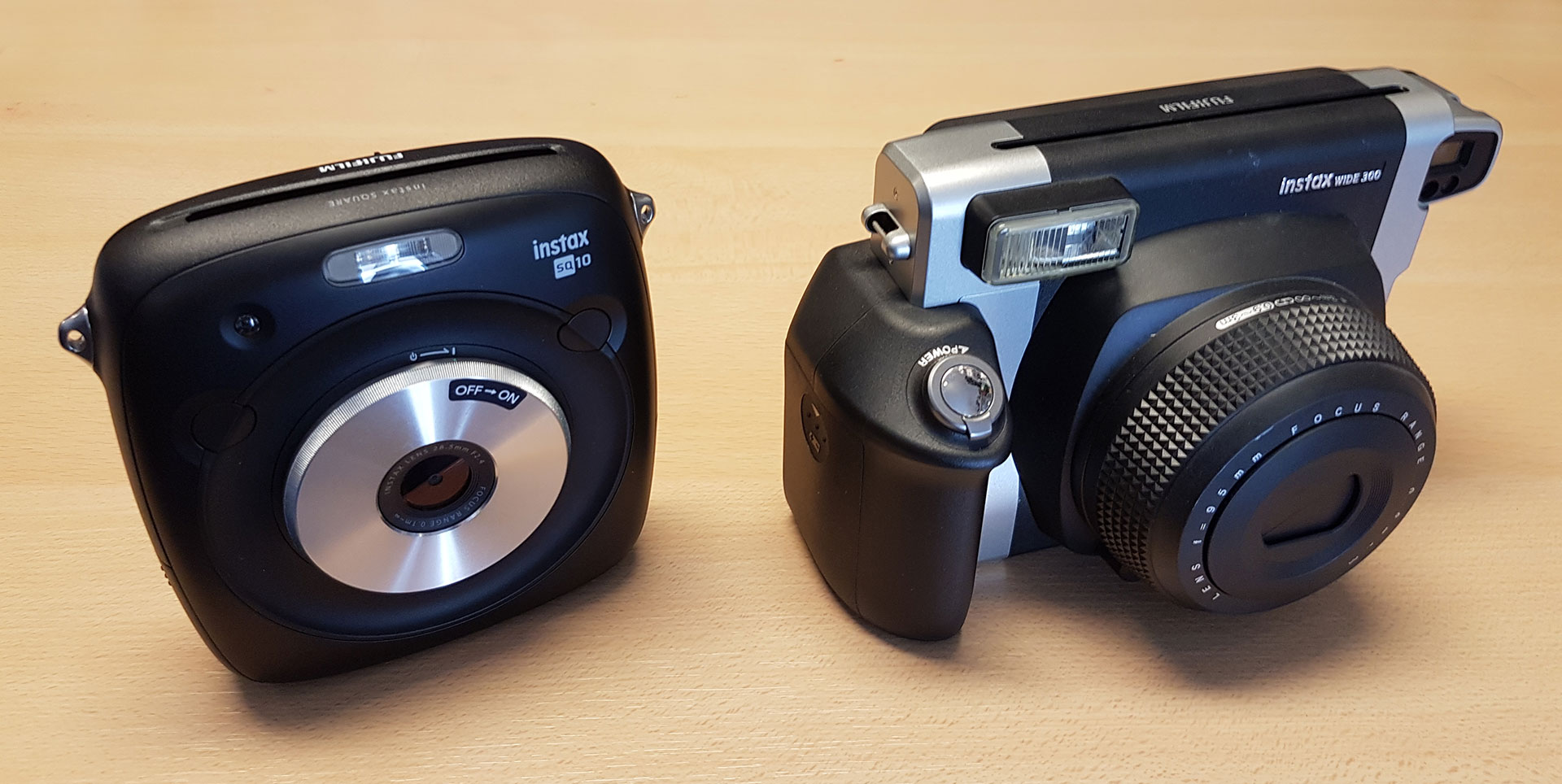
Above: Here's the Instax SQ10 on the left alongside the Instax Wide on the perpendicular. The Instax Wide photographic camera produces the largest print sizing of the Instax lineup, simply the camera is correspondingly much large. In contrast, the Instax SQ10 is only a little larger than the Instax Miniskirt cameras, while delivering images that are as tall as they are wide.
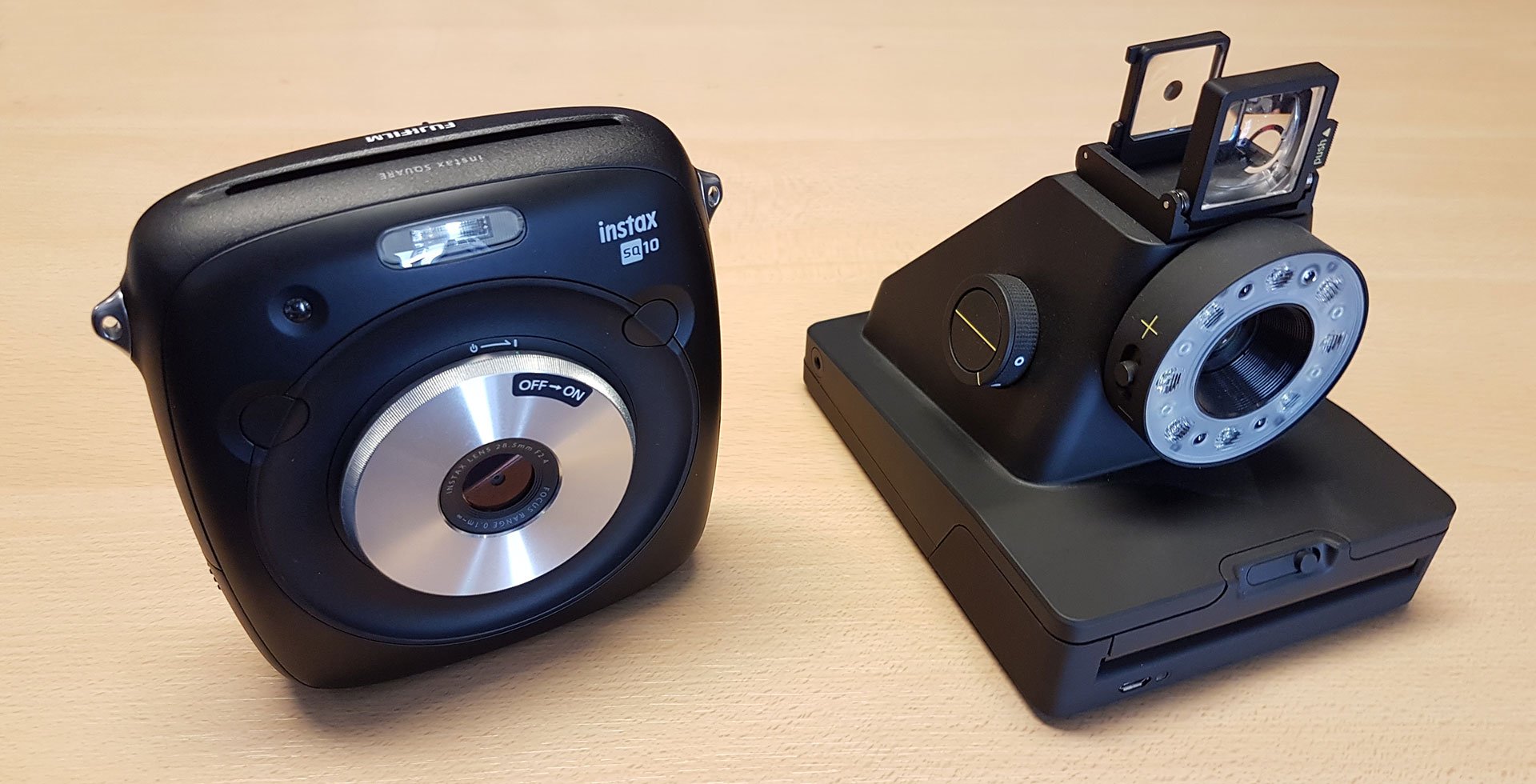
Above: Present's the Instax SQ10 alongside the Unacceptable I1, an disjunctive trice camera priced in roughly the aforesaid ballpark. The Impossible camera takes a different approach though, embracing radio set connectivity, smartphone control and larger Polaroid prints.

Above: The radially symmetrical design of the SQ10 camera can be in use left over or moral-handed – or indeed twofold-handed – without compromise. Information technology has large and comfortable finger and thumb rests on both sides, and 2 shutter release buttons to a fault. These can either be configured to fire the shutter or for one of them to switch between the three shot modes. Speaking of which, the three shooting modes are Standard, Bulb (up to tenner seconds) and Replicate Exposure.
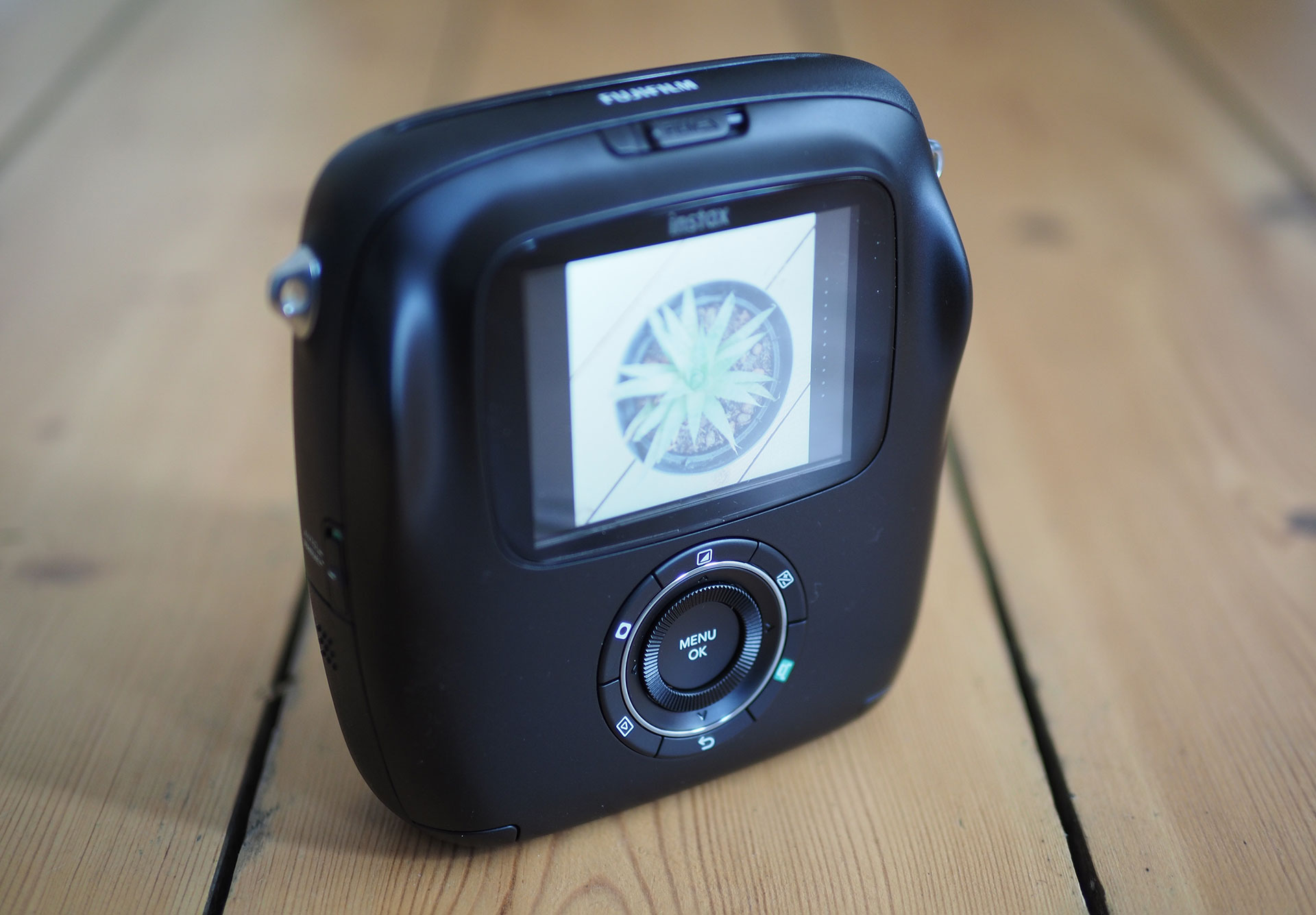
Above: The SQ10 employs a block out for composition, unlike the earlier analogue Instax Mini and Wide format cameras which use basic optic viewfinders. The combination of a digital sensor, screen and memory allows you to store images, review them, apply effects and crucially, lonesome print the ones you want (non to mention when you deficiency and Eastern Samoa many copies as you like). Note unlike the consumer-friendly Mini cameras, there's no selfie-mirror on the front of the SQ10, but the ability to review images on the screen means you can at the least check a composition and reshoot if necessary.
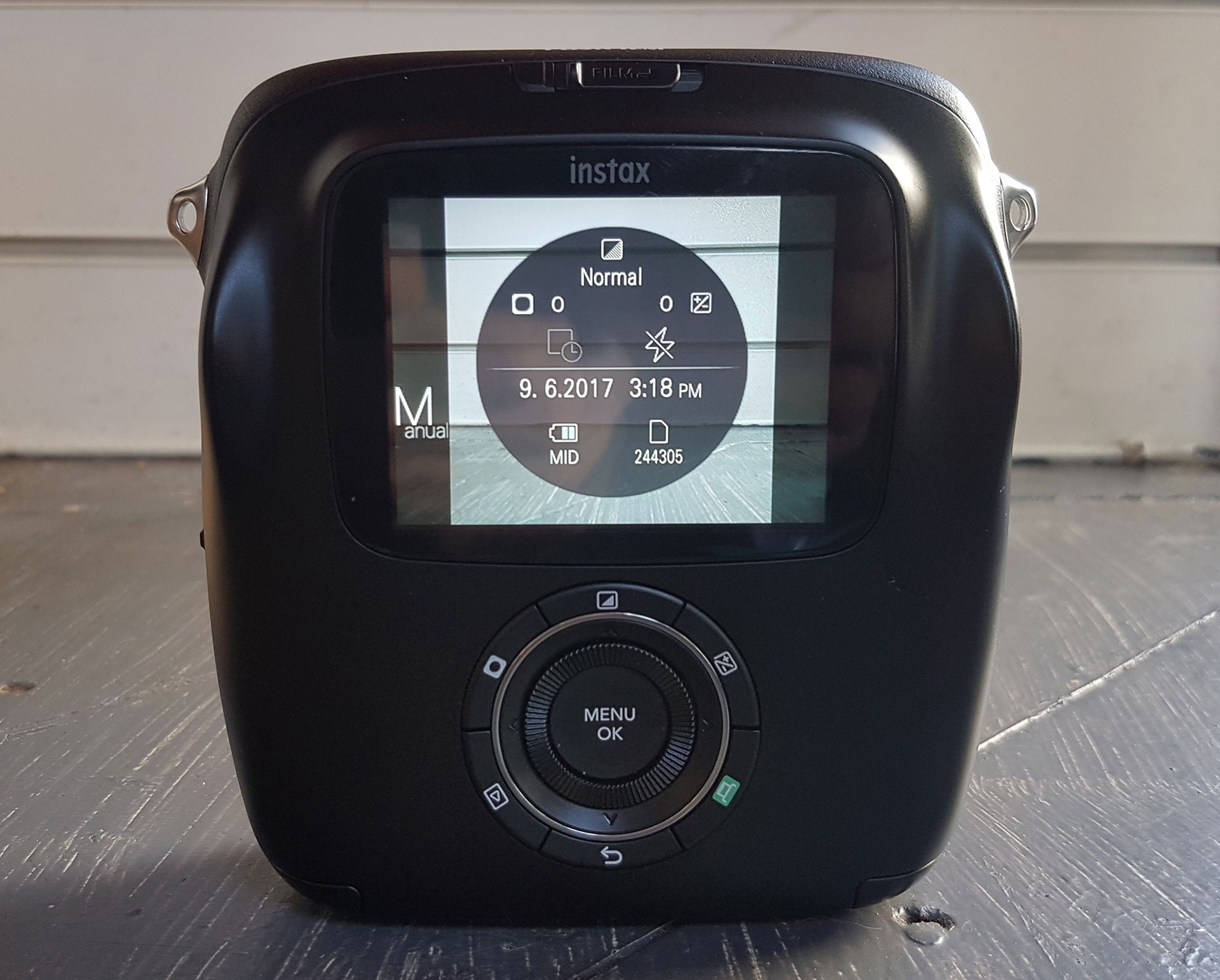
Above: The SQ10 is designed as a direct-and-shoot tv camera with fully automatic exposures. There's no indication of the exposure or ISO sensitivity atomic number 3 you shoot, leaving gear nerds like myself to try JPEGs future for clues. These reveal the lens aperture corpse fixed unfastened at f2.4 and the shutter varies automatically between half a moment and 1/29500; the base sensitivity is 100 ISO and if the shutter tries to fall flat on a lower floor 1/30, the ISO is increased mechanically up to 1600 ISO. Push the lowest of the buttons on the as panel and the SQ10 will reveal some applied effects along with the battery life and shots remaining in the computer storage. You can see this in the photo above, where you can also glimpse the full width of the 4:3 sensor greyed-out beyond the 1:1 square crop. Meanwhile ten dots on the justly lateral of the screen during normal makeup indicate how numerous physical prints are left over in the cartridge.

Above: While you could shoot with the SQ10 as a tralatitious member camera, capturing images onto a Micro SD card, it really doesn't make any sense. The 3 Megapixel closure and JPEG quality is soundly familiar by most cameras including phones. The primary ground for shooting with the SQ10 is of course to generate instant prints. Like another Instax cameras, a large door opens to accommodate the disposable cartridges; they slot-in well and contain ten prints.

Above: The ability to apply digital effects is a self-aggrandising have along the SQ10, and on that point's three buttons ordained to them on the rear. The top button lets you cycle through ten Instagram-style filter personal effects. The button to its left applies a vignette of varying strength, spell the button on the right adjust the brightness. Above are two prints made with the monochrome and reddish brown filters and some with generous vignettes applied. Musical note the filter, vignette and brightness personal effects can Be applied during composition or playback, but are only seen on-screen and in prints. The actual JPEG files recorded in the tv camera remain effect-free and are instead attended past CSV textual matter files containing the personal effects instructions for the television camera.

Above: the SQ10 saves its images to inside memory or an optional Small SD memory card. At that place's no quality options: the 4.9 Megapixel 4:3 shaped sensor has 2560×1920 pixels, but the camera permanently crops them to 1:1 straight images measure 1920×1920 pixels. These are then saved American Samoa JPEGs which work out scarcely nether 1Mb each. In that respect's enough internal memory to store about 50 images, but beware: while you can view and print them as oftentimes as you ilk with the SQ10, there's currently no way to get the files out of the internal memory and onto your computer or phone. If you lack to access the JPEG files outside the camera, you'll need to insert a Micro SD card and use this instead. Alongside the Micro SD slot is a USB left, but this is for battery-charging only, not information transfer. There's also no wireless connectivity, so the easiest way to get images onto your Instagram feed is to simply take a photo of the prints with your telephone set.

Above: The Instax SQ10 generates images measuring 1920×1920 pixels, but only uses 800×800 pixels to create its photographic quality prints. This substance it's practicable to rapid growth-in on an mental image in playback victimisation the raise bicycle by finished to 2.4 times and output signal information technology at the same resolution without any compromise in calibre. I've done that here, with the daring full image shown above left and the cropped adaptation at the level bes 2.4x zoom happening the right. IT's likewise realizable to curlicue around the image when zoomed-in to adjust the composition and arrangement.

Preceding: The zoom works both shipway. Soar upwards-out exploitation the wheel along the backwards and you'll see a familiar thumbnail view of four Beaver State nine images. Simply since the SQ10 effectively prints whatever you visit happening the screen, you can tell it to output the thumbnail sentiment like a miniskirt contact sheet. This can be good fun, simply the thumbnail horizon rear only register quartet or nine sequential images in the memory or on the card – there's no way to cull out a non-consecutive survival of images without permanently deleting those inbetween.

Above: the Micro Mount Rushmore State one-armed bandit can act both slipway too. IT's possible to copy images from another camera onto the carte du jour, insert IT into the photographic camera and plainly manipulation IT as a pressman – albeit only in the aboveboard format. I did this for these two prints above, dotty the Leica 8-18mm lens along the Lumix GX8 photographic camera. The SQ10 can be fussy about image formats and denotive though and I found it refusing to interpret files form certain cameras. It seemed bright with the Lumix GX8 JPEGs flat out the camera though even at the full resolution. Ultimately I think this printing process from another camera is a novelty and shouldn't be relied on here – if you want flash prints from some camera or phone, you'd glucinium advisable-off going for one of Fujifilm's portable Instax printers rather.
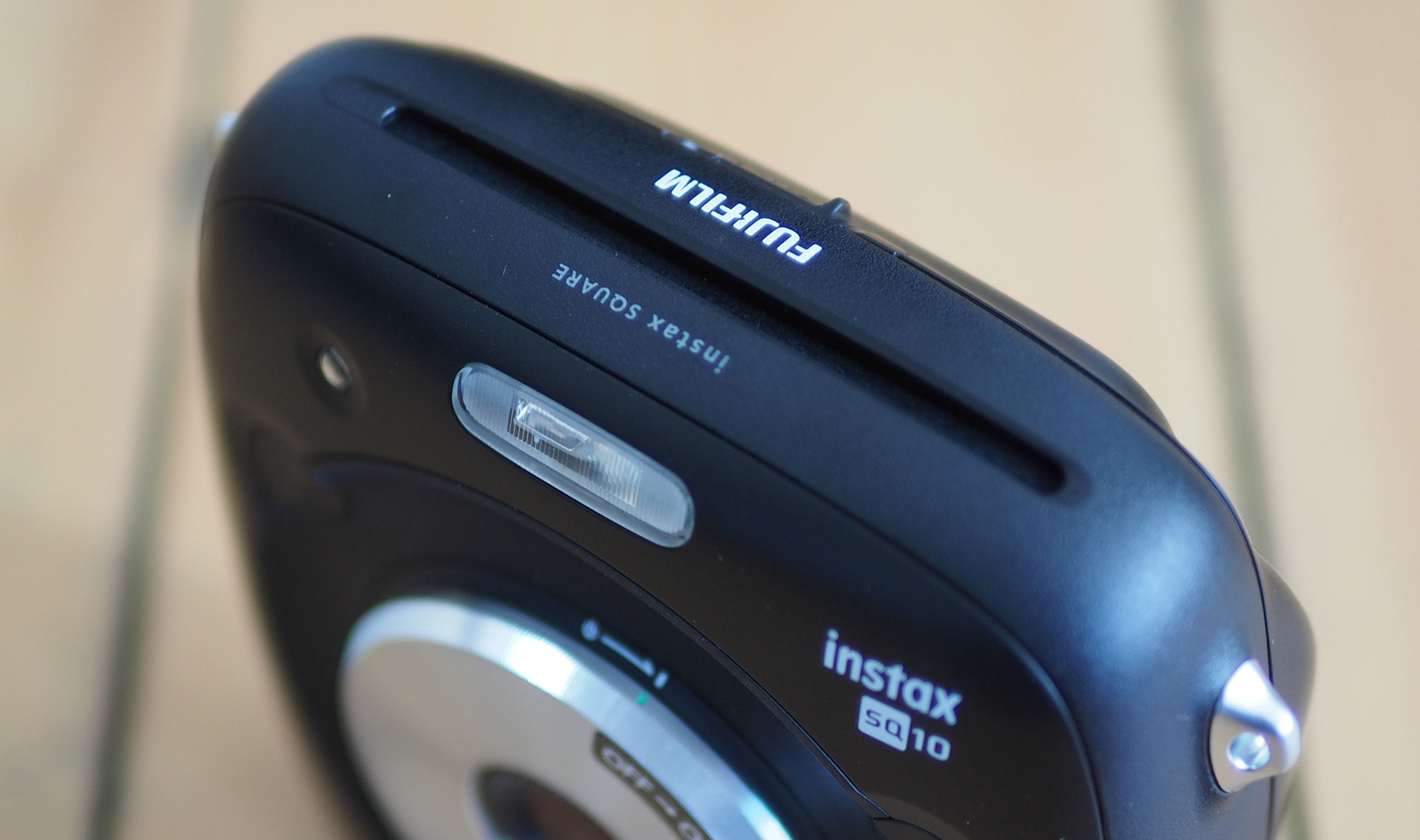
Above: Prints come forth from a expansion slot in the top of the camera, approximately 12 seconds subsequently the process starts. Around 15 seconds later the image begins to appear along the impress and IT reaches maximum impregnation and direct contrast after around two minutes. Same strange second formats, the developer chemicals are stored in a pouch in the blank area below the figure which provides a handy area to write a caption with a marker pen. A turn on the side of the camera sets the print operation between Auto and Manual. Set to Auto, the SQ10 will yield a mark of every single photo you take – just equal the analogue Instax Miniskirt and All-inclusive cameras. Set to Manual, the images are stored in the memory only and it's up to you if operating theater when you print them. Again you arse publish them A many times every bit you like, variable the personal effects besides if desired. Note many of my daylight prints came out a little bright, thusly you may prefer to lend oneself some darkening before outputting.
Checker prices at Amazon, B&adenylic acid;H, Adorama, eBay operating room Wex. Alternatively get yourself a copy of my In Photographic camera book or dainty Pine Tree State to a coffee! Thanks!
Pages: 1 2 3
Fujifilm Instax SQ10 review
Source: https://www.cameralabs.com/fujifilm-sq10-review/

Posting Komentar untuk "Fujifilm Instax SQ10 review"